AI in the Workplace II: Data protection meets popular AI tools
Popular AI tools and their GDPR profiles Following our last article on data protection considerations of employee use of AI systems, this article will expand the topic to cover specific popular AI tools and their data handling practices. ChatGPT (OpenAI) Free tier: conversations may be used for model training by default ChatGPT Enterprise / API: […]
AI in the workplace: Main points of concern regarding the use of AI powered tools by employees
AI in the workplace — current reality The usage of AI powered solutions by employees is becoming more common. The growth in popularity of systems such as Large Language Models (capable of generating content based on user inputs) raises serious questions about data protection. Main risks Customer personal data: employees input customer data into ChatGPT […]
AI: Main Challenges and Opportunities
The AI opportunity By 2030 it is estimated that the wide scale adoption of AI Systems will lead to a 9 trillion USD increase in the Global GDP. AI offers transformative potential: automation of repetitive tasks, improved decision-making, personalised services, accelerated research and innovation. Main challenges Bias and fairness: AI systems can perpetuate or amplify […]
Generative Artificial Intelligence and data protection guidance document
EDPS guidance on generative AI On 3 June 2024, the EDPS issued a guidance paper aiming to outline general guidelines on generative Artificial Intelligence and how they risk to affect personal data protection. The guidance provides a practical checklist for organisations deploying or building generative AI systems. Key compliance requirements Legal basis: identify valid legal […]
Digital regulations in Europe (and abroad): data protection as a central pillar in AI regulation.
GDPR as central pillar Following market trends, as well as regulatory concern, one may realise that Artificial intelligence (AI) systems have come into discussion much more frequently in recent times. GDPR remains the foundational framework upon which all other European digital regulations are built. The European regulatory ecosystem GDPR: personal data protection — the fundamental […]
Generative Artificial Intelligence: Developments preceding the AI Act and how this technology can be regulated moving forward
Norway DPA sandbox: early lessons In 2020 the Norwegian Data Protection Authority established a regulatory sandbox programme, aimed at providing developers of AI systems with the needed tools to safely develop and test privacy-respecting AI applications. The sandbox produced valuable guidance on applying GDPR to AI systems before the AI Act existed. Key GDPR challenges […]
7 Steps for Verifying Your AI Solution Conformity with GDPR

Step 1: Assess AI necessity Is there a simpler, safer solution achieving the same objective? Is the data required proportionate to the benefit? Are the consequences of AI errors reversible? Step 2: Data inventory Identify all personal data processed by the system Input data, training data, output data Update ROPA with the new AI processing […]
Understanding GDPR: Accuracy and AI

The accuracy principle and AI As AI is becoming much more prominent in the general public use for a variety of activities ranging from business improvement and automation to mere amusement of users, generating images, writing text and more, the intersection between AI outputs and GDPR’s accuracy principle is increasingly important. Article 5(1)(d) GDPR requires […]
How to DPO: The AI version
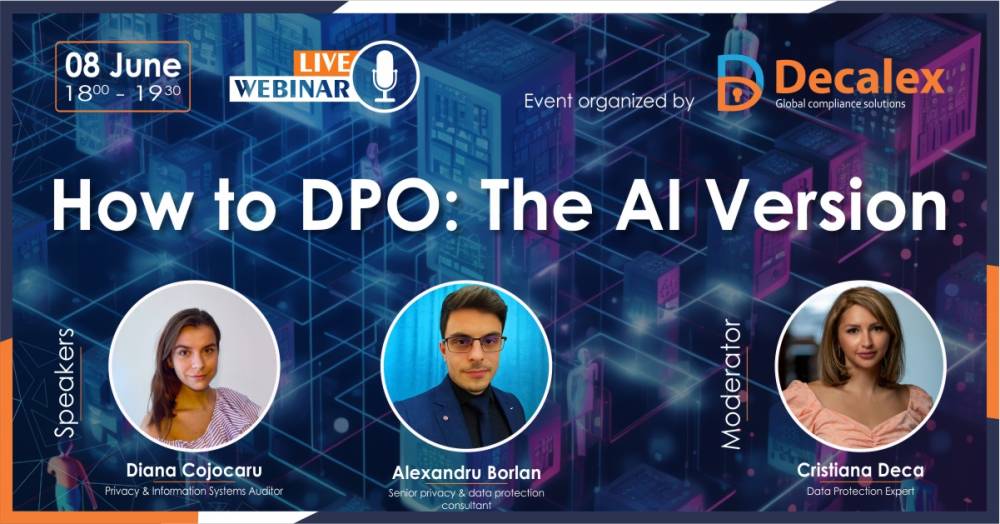
The DPO’s role in AI governance Artificial Intelligence (AI) holds great potential to transform industries and enhance efficiency, but it also introduces critical security considerations. As organisations embark on their AI journey, Data Protection Officers (DPOs) play a crucial role in ensuring that AI initiatives align with data protection regulations. Step 1: Assess AI necessity […]
Privacy and Data Protection: Does the risk of AI outweigh its benefits?

Context: generative AI and the ChatGPT explosion Let me save you the suspense, they do, in most cases anyway. The most popular software that fits this description is undoubtedly ChatGPT, the product launched by OpenAI that took the world by surprise, polarising people with contrasting and intense opinions. In order to answer what AI is, […]