


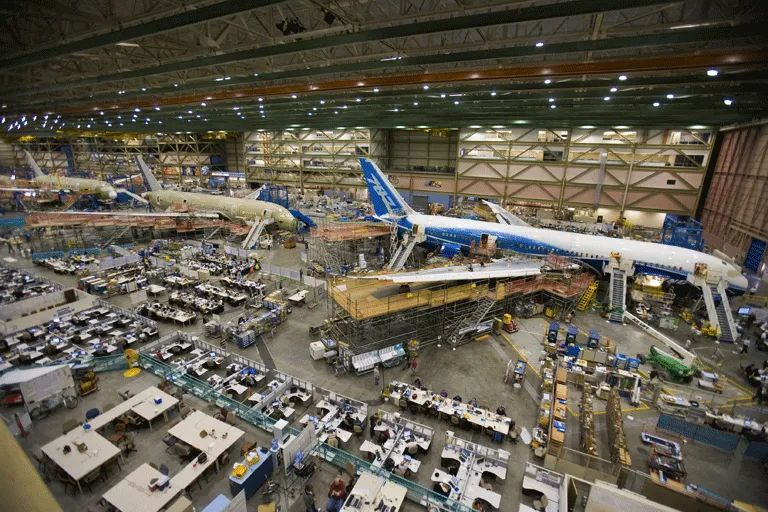
Boeing has had a major say in the aerospace industry since its beginnings and continues to be the undisputed leader in this industry, by trying to develop
Boeing has had a major say in the aerospace industry since its beginnings and continues to be the undisputed leader in this industry, by trying to develop new technologies that improve the way to live, to communicate and travel. In an industry focused on technology, a competitive advantage, built around the concept “innovate better than the competition”, plays an extremely important role. Protecting the innovations enable the company to have positive results and to be a profitable business.
In an interview for WIPO Magazine, Peter Hoffman, Boeing’s Vice President of Intellectual Property Management, mentions that the company follows a process with several and highly detailed steps. Since patents are public documents, the company explores every time whether it is in his interest to patent inventions or to be kept as trade secrets. Such analysis takes into account the potential use of innovative product or service and the licensing potential.
Boeing’s intellectual property portfolio, whether we are talking about brands, copyrighted materials, patents or trade secrets, is a corporate asset that is used to ensure competitiveness.
“If we develop something new in network systems, for example, that has an application in a non-competing business, such as the auto industry, we are very interested in sharing that IP through licensing arrangements.” mentions Peter Hoffman in the interview for WIPO Magazine.
Currently, Boeing has a dedicated IP team, based in the US, but, being a global business, the team is responsible for evaluating all the technology developed in all Boeing centers around the world. To do this, Boeing is working with a network of lawyers that provides real-time information on local laws and practices. Though Boeing has not engaged in much IP litigation, Peter Hoffman admits that this does not mean that they wont protect their intellectual property rights.
The actual environment is very challenging for Boeing, but the dedicated team work to ensure that the company’s brands are not misused. Cyber threats are also a challenge, which is why the company is trying to secure their information from hackers as well.
Innovation is an extremely useful ‘instrument’, that’s why Boeing is constantly looking for the best people and the best technologies to maintain its leadership in the market.
Source: WIPO Magazine
Additional content by Decalex Legal Solutions (current name Decalex Digital).
Understanding the relevant risks, responsibilities, and objectives provides the necessary perspective for setting priorities and strengthening organizational resilience
Understanding the implications for activities, processes, responsibilities, organizational objectives, and decisions is the foundation of an informed and sustainable approach.
Effective risk management requires clear responsibilities, appropriate processes, and monitoring mechanisms that are commensurate with the level of exposure.
Clear roles and coordination mechanisms contribute to the coherence and sustainability of decisions.
Regular assessments of processes, responsibilities, and control mechanisms provide the necessary foundation for strengthening organizational resilience and governance.