


Article 15 serves as a dual safeguard. For individuals, it provides the opportunity to find out what data a company processes about them and for what purpose. At first glance, it may seem counterintuitive, but for businesses, Article 15 of the GDPR is also a tool for facilitating business operations, promoting organizational transparency, and increasing the trust that individuals have in your company.
However, in certain situations, access requests can become abusive or unlawful. Their impact entails unnecessary costs and unjustified legal risks. Recently, in the Brillen Rottler case in Austria, a data subject exercised their right of access to their personal data immediately after subscribing to the company’s newsletter, with the aim of obtaining compensation. The Court of Justice of the European Union (CJEU) clarified that such a request may be considered excessive if the data subject’s actual purpose is not to verify the lawfulness of the processing of personal data, but to obtain compensation.
Companies are thus faced with the challenge of striking a balance between respecting the rights guaranteed by the GDPR and optimizing resources while maintaining their reputation.
Under the GDPR, any individual has the right to receive confirmation as to whether their data is being processed by your company, and, to the extent applicable, access to the data you process and other relevant information, such as: the purpose of the processing, the categories of data processed, the recipients of the data, or the data retention period and the relevant criteria by which you determined it.
We reiterate that this right is essential for transparency and the trust of individuals who access your services or products, and companies that respond correctly and promptly strengthen their relationship with customers and avoid significant penalties (financial, organizational, and reputational).
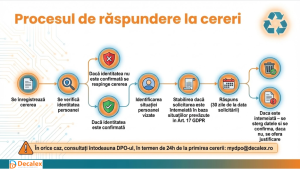
A request for access may be considered abusive in the following situations:
The CJEU has emphasized that the data subject’s intent is essential; in the Brillen Rottler case, even a first request may be excessive if the purpose is abusive.
To balance your company’s interests with the obligations imposed by the GDPR, the practical recommendations are:
The GDPR allows the data subject to claim compensation for material and non-material damages caused by the violation of their rights. However, it must be demonstrated that the damage is actual; if the data subject created the situation through abusive behavior, compensation may be denied. There is no automatic right to compensation for every request that is not processed correctly, especially if the data subject’s intent was abusive. Assessing each case individually is essential.
Failure to follow procedures for the improper handling of access requests can lead to GDPR sanctions (fines, warnings), legal implications, negative reputational impact, or excessive consumption of internal resources to remedy a mishandled access request.
Managing access requests under the GDPR is not only a legal obligation but also an opportunity to strengthen relationships with data subjects—who may very well be the customers accessing your goods or services—and to demonstrate transparency. However, companies must be aware of the potential for abuse: excessive, repetitive, or financially motivated requests should not be treated as legitimate.
The key lies in assessing the requester’s intent, fully documenting the process, and applying a pragmatic and GDPR-compliant approach.
Oana Sîrbu
Junior Privacy & Data Protection Consultant